
Introduction
Two forklifts can share the same age and hour count and still carry a $10,000 price gap. Why? Condition, configuration, maintenance history, and seller support all shift the real cost, even when the spec sheet looks identical.
Used forklift value is the price a buyer can fairly pay, or a seller can fairly expect, for a given truck based on its condition and market. It's not a number pulled from a universal chart.
This guide is built for U.S. warehouse, distribution, manufacturing, construction, agriculture, logistics, and industrial buyers and sellers. We'll walk through the factors that move price, the process dealers and private sellers actually use, and the red flags that should pause any transaction.
Key Takeaways
- Specs, hours, and maintenance history drive value more than age alone
- Compare like-for-like equipment using current listings or dealer quotes, not a generic price chart
- Professionally inspected or reconditioned units cost more upfront but reduce uncertainty
- Buyers should calculate total cost of ownership; sellers should document condition thoroughly
What Used Forklift Value Means and Why It Matters
"Value" changes meaning depending on who's asking and why. A dealer's asking price, a fair market value, a trade-in offer, and an auction result are four different answers to four different questions.
| Measure | What it actually tells you |
|---|---|
| Asking price | What a seller hopes to get: a starting point, not a settled figure |
| Fair market value | What a truck would sell for between a willing buyer and seller, with neither under pressure |
| Trade-in value | A dealer's offer, discounted for resale prep, marketing, and carrying costs |
| Auction/liquidation value | A single observed transaction, often under time pressure |
| Total ownership cost | Purchase price plus repairs, battery or fuel costs, downtime, and parts over the truck's remaining life |
A trade-in offer is not a retail sale price, and one liquidation result does not set market-wide value. Which figure matters also depends on the truck and the job.
Value Is Application-Specific
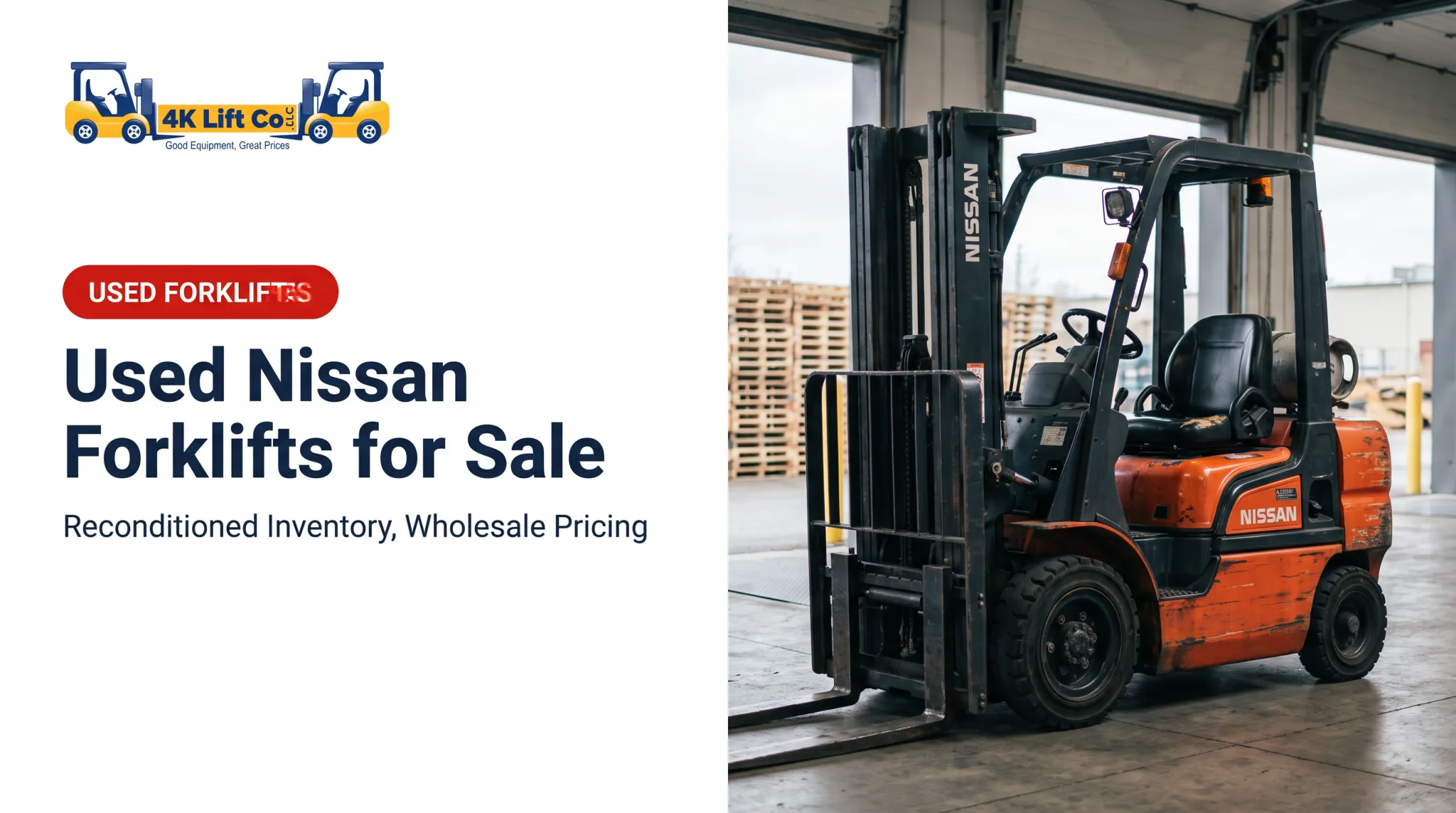
A warehouse cushion-tire truck, an outdoor pneumatic-tire truck, a high-capacity unit, and an electric forklift are not interchangeable, even at similar prices. Typical reconditioned ranges show how far apart those markets sit:
- Warehouse-class (3,000–6,000 lb): Hyster and Yale units often run $9,000–$20,000 reconditioned
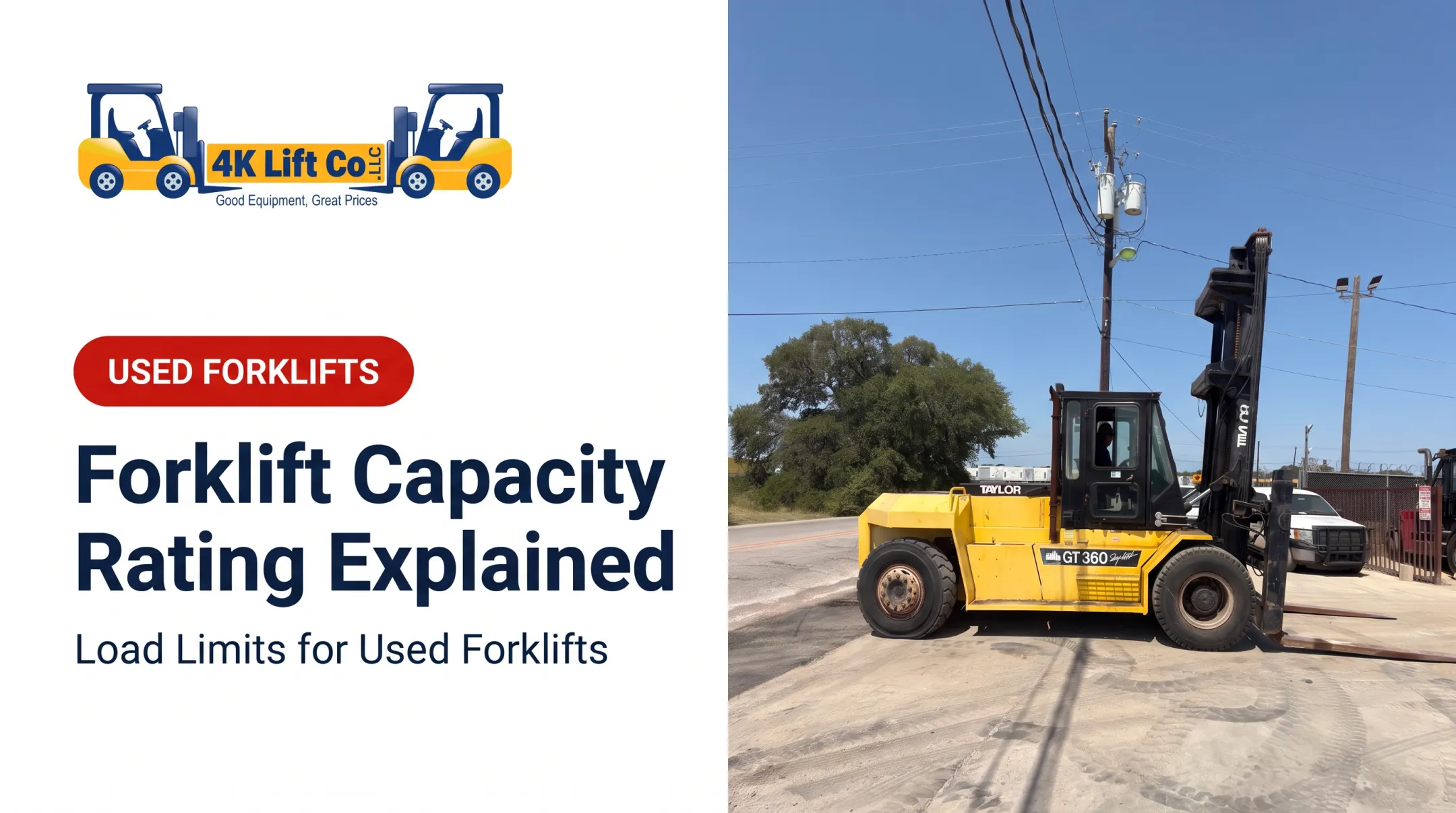
- High-capacity units: Can exceed $100,000
- Example listing: A 2017 Hyster H80FT rated 8,000 lb with 720 hours listed at $27,995 delivered—well above a comparable-hour 5,000-lb warehouse truck
A realistic valuation helps buyers avoid overpaying and helps sellers price competitively. It also supports bigger calls: repair versus replace, trade versus sell outright, or whether to add a truck to the fleet.
A price estimate is still only a starting point. It is not a substitute for an in-person inspection, an operational test, a service-record review, and confirmation of the truck's actual specifications.
How Used Forklift Pricing Works
Pricing a used forklift follows a sequence, not a formula. Skip a step and the number you land on won't hold up.
Build a Comparable Set First
Before comparing any two listings, match them on:
- Capacity, fuel or power source, and tire type
- Mast height, brand, model, and year
- Hours, attachments, and reconditioning level
- Location
A dealer's October 2025 benchmark data shows how tightly these comparisons need to be drawn. Its published U.S. used-forklift price ranges only apply to trucks built in 2010 or later, with 5,000 hours or fewer and a 149–200-inch mast. Apply those ranges to an older or higher-hour unit and you'll be comparing apples to forklifts.
Adjust for Age and Hours
Hours matter, but only alongside context:
- Maintenance quality and consistency
- Shift pattern (single-shift versus round-the-clock)
- Load intensity and terrain
- Operator behavior
- Prior work environment
A single-shift operation puts roughly 2,000 hours per year on a truck. A unit under 10,000–12,000 hours with documented maintenance is usually still a solid buy. A well-maintained 8,000-hour truck can easily outperform a neglected one with half that total.
Weigh Condition, Components, and Seller Prep
Mast and chains, forks, hydraulics, engine or motor, transmission, steering, brakes, tires, battery, charger, controls, and safety equipment all factor into price.
An as-is truck, a minimally inspected truck, and a professionally reconditioned unit are not the same product, even with identical specs on paper.
4K Lift Co. reconditions every forklift through a full mechanical teardown, hydraulic and engine load testing, and a safety check before it's priced. Worn parts get replaced, and units that don't meet standard don't go out the door. That preparation shows up in the asking price, but it also shrinks the buyer's uncertainty.
Add Attachments, Subtract Transaction Costs
Side-shifters, fork positioners, clamps, cabs, and lighting add real value when they match the buyer's application. A Toyota 8FGCU25, for instance, lists with a fork-positioner and side-shift already built into its $17,995 delivered price. Side-shift alone typically runs about $950 if added separately.
Attachments that don't fit the job, or that are hard to service locally, add little.
Factor in delivery, financing charges, taxes, immediate repairs, and battery or charger replacement. These can swing the effective price by thousands even when the sticker price looks identical to a competing listing.

What Information Determines a Forklift's Value?
Core specifications set the baseline: manufacturer, model, capacity, lift height, mast configuration, tire type, fuel or power source, and intended indoor or outdoor use. A Toyota 8FGU25 at 5,000 lb with a 16-foot triple-stage mast and dual-fuel engine occupies a different value tier than a narrow-aisle electric reach truck, even at similar ages.
Operating History Changes the Number
Single- versus multi-shift use, heavy-load handling, rough terrain, corrosive or dusty environments, and cold storage all accelerate wear. Houston's port and petrochemical facilities, for example, put humidity, outdoor exposure, and back-to-back shifts on equipment that wears down fast if it wasn't built or reconditioned for that work.
A Focused Inspection Checklist
Before valuing any unit, check:
- Forks, mast, and chains for wear or cracking
- Hydraulics and frame for leaks or structural damage
- Tires, engine or battery, and controls for wear and response
- Brakes, lights, alarms, and seatbelt for proper function
- Hour meter credibility against physical wear
Service records should show preventive maintenance, major repairs, component replacements, and consistent lubrication schedules. Check whether timing belts were replaced every 3,000 hours, for example.
A meter reading of 7,500 hours with service records stopping at 3,000 hours is a mismatch worth questioning. Equipment averaging 2,000 hours a year should land near 8,000–10,000 hours after four to five years, with records that keep pace.
Electric vs. Internal Combustion
Battery condition can override everything else on an electric unit. One stark example: a 3,050-lb electric forklift with a dead battery and unknown operating condition sold for just $1,760 at a November 2025 Oklahoma auction. That price tells you nothing about what a tested, operable unit of the same model is worth.
Battery age, tested capacity, and charger compatibility deserve the same scrutiny as an engine on an IC truck.
Brand reputation, parts access, and local technician familiarity also shape practical value. A popular model with strong regional parts availability holds value better than a rare configuration nobody nearby can service.

Where Used Forklift Valuation Is Applied
The same principles apply whether you're buying from a dealer, a private seller, an auction, or comparing online listings.
If you're buying, request these before comparing prices:
- Serial number, year, model, and capacity plate
- Hour-meter readings and service history
- Inspection report and any outstanding repair list
- Battery and charger details (for electric units)
- Attachments, warranty terms, and delivery cost
If you're selling, preparation drives the price you'll actually get:
- Clean the unit and organize maintenance records
- Photograph key components, including the capacity plate and any wear points
- Identify recent repairs and disclose known defects upfront
- Research comparable listings before setting an asking price
Those steps cover single-unit deals. Fleet managers face a different calculation than a one-time buyer. Model standardization, shared parts inventory, operator familiarity, and downtime risk all factor into whether an older unit stays in service or gets replaced.
When you compare listings or prepare a unit for sale, use this checklist:
| Strengthens a price discussion | Should trigger more inspection |
|---|---|
| Complete service records | Missing or inconsistent service history |
| Verified hour meter | Hour-meter reading that doesn't match wear |
| Recent repair receipts | Unexplained gaps in maintenance timeline |
| Clear photos of major components | No photos of mast, forks, or undercarriage |
Common Issues and When a Simple Estimate Is Not Appropriate
A few assumptions cause more overpaying and underselling than anything else:
- "Fewer hours always means better value": a low-hour truck with a worn-out battery or neglected hydraulics isn't a bargain
- "The newest truck is automatically the best deal": application fit matters more than model year
- "A low online price is a bargain": it may reflect a dead battery, missing records, or undisclosed damage
- "Cosmetic appearance proves mechanical condition": new paint hides nothing about the engine or mast
A generic price range misleads the moment it blends different capacities, fuel types, mast heights, or reconditioning standards. That's why specification-matched comparisons matter more than a single published number.
Red Flags Worth Pausing For
- Missing serial number or illegible capacity plate
- Inconsistent hour-meter readings versus service records
- No maintenance documentation at all
- Hydraulic leaks, structural welds, or visible cracks
- Damaged forks or chains, or severe corrosion
- Unclear ownership or title issues
A simple estimate also falls short for:
- High-capacity or specialty forklifts
- Heavily modified trucks
- Units with major damage
- Electric forklifts with uncertain battery condition
- Multi-unit purchases
A low purchase price can still be the wrong choice if the truck will run continuously, support critical production, or work in a demanding environment where downtime isn't acceptable.
For buyers who want to reduce that risk, a professionally inspected or reconditioned unit is worth weighing against repair or rental. 4K Lift Co.'s used and reconditioned inventory is backed by repair and maintenance support, replacement parts, delivery, financing for qualified buyers, and a 30-Day Exchange Option. That support matters more on a higher-stakes purchase than on a low-cost spare unit.

Conclusion
Used forklift pricing is a comparison-and-adjustment process, built on specifications, hours, condition, history, market demand, included equipment, and seller support. No single age-based formula or universal chart replaces that work.
Buyers should compare total cost and remaining useful value, not just sticker price. Sellers should provide accurate documentation and realistic condition details rather than hoping a clean coat of paint does the talking.
Practical next steps:
- Gather the forklift's specifications and service records
- Compare like-for-like equipment across sellers
- Arrange an inspection before you commit
- Request a detailed quote that reflects condition and included equipment
Frequently Asked Questions
What is the typical price range for a used forklift?
Prices vary widely by capacity, fuel type, age, hours, condition, and configuration. For reference, a 2010-or-newer, lower-hour 5,000-lb electric forklift typically runs $17,900–$29,700, while comparable 10,000-lb pneumatic trucks can run $24,000–$55,900.
How do you price a used forklift?
Compare similar listings matched on capacity, fuel type, mast, and tires, then adjust for hours, condition, and included attachments. Factor in repairs, delivery, and current market demand before settling on a number.
How do you sell a used forklift?
Clean the unit, organize service records, confirm accurate specifications, and take clear photos of key components. Disclose any defects honestly and research comparable equipment before setting your asking price.
How many operating hours are considered high for a used forklift?
It depends on the truck type and duty cycle—10,000 hours is often treated as a screening point for propane units, while electric forklifts frequently run well beyond that with proper battery care. Maintenance history matters more than the raw number.
What are the seven classifications of forklifts?
OSHA defines seven classes of powered industrial trucks: electric rider (I), narrow-aisle (II), hand/rider (III), IC cushion (IV), IC pneumatic (V), tractors (VI), and rough-terrain (VII).