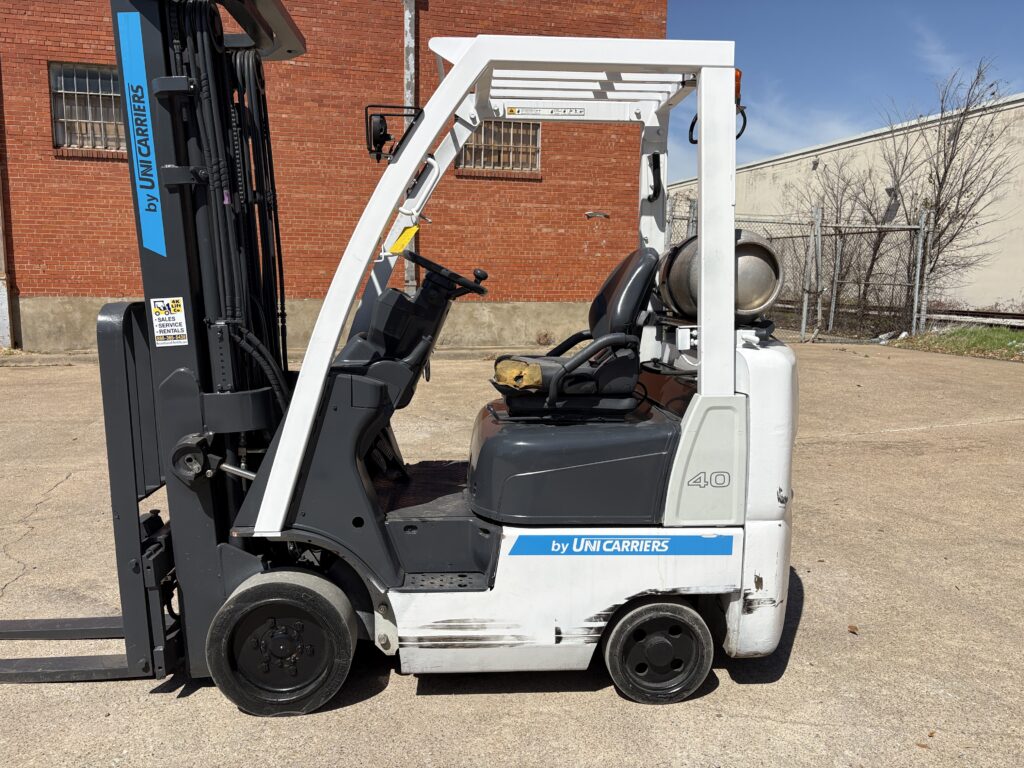
Purchasing a new piece of materials handling equipment is no small investment for any size of operation. Running a busy distribution center or a corner fabrication shop both require tools that match the pace of your work. When sourcing a new or used forklift truck, many buyers get caught up in the emotional aspect of “buying new” versus getting something used.
The simple truth is that most OEM, factory-fresh equipment just won’t give you the highest ROI. Amortized over time, the value sweet spot for maximum productivity (and profitability) actually lies in the pre-owned forklift category. Let’s break down a few of the most common variables that can make used forklifts the smarter business decision.
Avoid Taking That Huge Depreciation Hit Upfront
It’s Accounting 101 — let’s talk about depreciation. The second your new forklift rolls onto a jobsite, it instantly loses value. Did you know the biggest drop in value for any piece of machinery happens in the first two years of ownership, similar to buying a new car? As soon as you drive that baby off the lot, most of your investment is gone. When you go pre-owned, it’s the previous owner who took that initial hit — meaning you own that equipment at fair market value.
Think about that for a minute — paying market value is one of the biggest advantages to buying used over new. Say your business outgrows the asset after three years, and you need to unload it. Chances are you’ll sell it for close to what you paid. No huge swing in capital, plus you have more working cashflow should you need to pay an employee bonus or buy extra inventory.
And let’s talk about the quality. A lower upfront typically means you can afford to upgrade a class of forklift or spec up.
Know Your Duty Cycle and Shop Within It
Not every warehouse runs 24/7. If your facility only needs a forklift to move goods three to five hours per day, it doesn’t make a lot of sense to spend extra money on a new engine or battery. If your equipment will only see medium-to-low-duty cycles, buying used should be your first option.
A lightly used, reconditioned unit, properly cared for, can easily outlast a newer truck that has seen heavier use. Imagine you needed a reach truck to move occasional pallets around a 50,000 square-foot warehouse. Whether that truck has zero or 3,000 hours doesn’t really matter. It still raises and lowers those pallets the same, and presuming it was properly maintained by the previous owner, it’ll continue to do so for your business. Just be sure to purchase with your project timeline in mind.
Tip: Check Your Forklift Hydraulics for Proper Maintenance
Inspect all hydraulic cylinders for signs of “wetness” or scoring. Raise the carriage all the way up, let it sit for ten minutes, lower the forks and see if they’ve dropped more than half an inch. If they have, you may need to have your valves adjusted and seals replaced or rebuilt.
Immediate Needs Trump Incoming Factory Backlogs
Ordering new material handling equipment is painful enough — but when you go to place that order, you may be looking at six months to a year of waiting for the factory to build your truck. Ouch. What happens if you land that huge contract and need trucks yesterday? What if it’s the peak of shipping season and you need every operator and truck you’ve got just to keep up?
Buying used means getting it right now. You can walk, look at a truck, test drive, and have it at your facility within just days. Buying used eliminates that dreaded downtime — and your employees aren’t standing around watching your inventory pile up.
Technology Isn’t Always Better | Parts Availability
This goes hand-in-hand with our last point. New forklifts these days come equipped with some serious tech. Computerized, Tier 4 final engines and proprietary software mean basic troubleshooting now requires special computers that only the manufacturer offers. All that tech doesn’t come cheap when you need a part replaced, or your truck is in the shop.
Older forklifts, early 2000’s and back, have older technology. While not as flashy, these forklifts run proven mechanics. That means parts are more readily available from different vendors, and your local heavy equipment shop can typically make repairs without those fancy OEM computers.
30 Seconds to OSHA Compliance
- Is your existing forklift visibly labeled with a capacity plate?
- Are the chains free of rust and adequately lubricated?
- Does your horn and backup alarm meet the mandated decibel level?
If you answered no to any of these questions, you could be putting your employees and inventory at risk by continuing to operate your equipment.
Understanding the Reconditioning Process vs. As-Is Sales
All used equipment falls somewhere on the quality spectrum. Private party sales can be risky (“as-is” purchases), but factory reconditioned trucks from specialized dealerships are the cream of the crop.
When we buy trucks for resale, we take them in for a multi-point inspection. We replace all wear items (tires, seats, hoses, etc.) and put major components through a load test (mast, powertrain). We upgrade every part that wears down over time. We do this with every truck we purchase. Reconditioning a used truck gives you the best of both worlds. You get a truck that runs and looks like new at a fraction of the cost.
Invest With Confidence in 4K Lifts for the Long Term
Buying a used forklift shouldn’t feel risky — or like you’re being pushed into buying something you don’t need. At 4K Lifts, we have over 35 years of experience buying and selling materials handling equipment. Our inventory sits at over 300 units strong — we will always have what you need for your business, whether you’re looking for an immediate need or seeing your business grow.
We back every sale with a 30-day exchange policy and offer flexible financing, so you can invest with confidence. No salesperson here — if you need help we’ll pull one of our multi-lingual team members to help you find the right machine for your duty cycle. Keep servicing that used forklift with us, and we’ll keep you up-to-date on how to keep it running safe and compliant.
Need a specialized piece of equipment to move your business forward? Reach out today to see how a used electric reach truck or diesel lift can help your company thrive.
Frequently Asked Questions
Q. How do I identify whether a used forklift was reconditioned correctly?
A full recondition includes putting the hydraulics through a load test, as well as a battery discharge test for electric units. We run them like we would any new unit we purchase and replace every wear item that is purchased. That’s what you’re looking for.
Q. What types of financing are available with pre-owned forklifts?
We have flexible financing available for all of our pre-owned inventory. We understand that as small business owners you need to hold on to your cashflow and we will work with you.
Q. How long does a used electric forklift last?
It depends on your battery health and your duty cycle, but with proper maintenance and a good battery (fresh or high-amperage recondition), a reconditioned truck can easily give you 5-10 years of great warehouse service.