Every second saved, every movement optimized, and every piece of equipment utilized to its fullest potential directly contributes to a plant’s overall productivity and profitability.
While assembly lines and automated systems often grab the spotlight, the unsung heroes of material handling — forklifts — play an absolutely critical role in keeping manufacturing operations running smoothly.
At 4K Lifts, we understand the dynamic needs of modern manufacturing plants and offer a wide range of high-quality forklifts that are designed to elevate your productivity to new heights. We believe that investing in the right material handling equipment is not just an expense; it’s a strategic move that can significantly enhance your operational output.
How Forklifts Transform Material Flow
Imagine a manufacturing plant operating without the aid of forklifts. The movement of raw materials, work-in-progress, and finished goods would be a laborious, time-consuming, and potentially hazardous undertaking. This is where forklifts step in, revolutionizing the way materials are handled and directly impacting the efficiency of the entire production process.
One of the most obvious ways forklifts improve productivity is by enabling the swift and safe movement of heavy and bulky loads. A single forklift can lift and transport loads weighing several tons, a task that would be impossible or highly inefficient for manual labor.
This capability drastically reduces the time required to move materials between different workstations, from receiving docks to storage areas, and finally to shipping. Without forklifts, the flow of goods would grind to a halt, creating bottlenecks and delays across the production line.
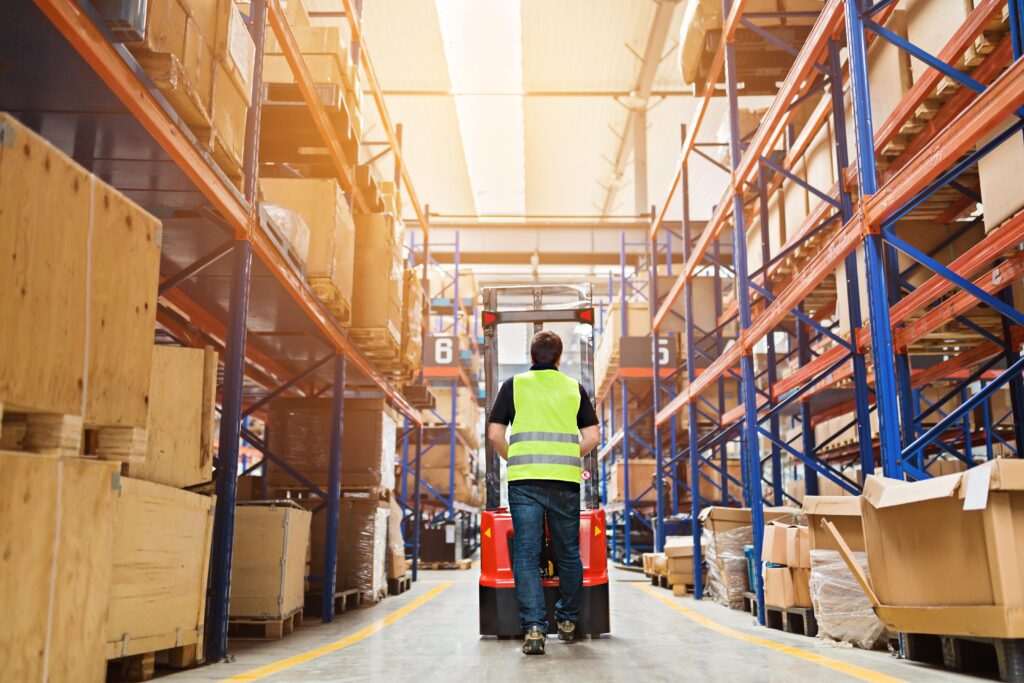
Furthermore, forklifts facilitate optimized space utilization within manufacturing plants. Modern forklifts, particularly narrow-aisle and reach trucks, are designed to operate efficiently in confined spaces and at significant heights. This allows manufacturers to stack products vertically, maximizing storage capacity within the existing footprint of the facility.
Instead of expanding outward, which can be costly and time-consuming, companies can leverage vertical space — leading to significant savings on real estate and construction. This vertical stacking capability also contributes to better organization and easier retrieval of inventory, further enhancing productivity.
Customize Your Processes and Attachments
Beyond simple movement and stacking, forklifts also play a crucial role in streamlining specific manufacturing processes. For example, in assembly lines, walkie stacker trucks or tow tractors can be used to move assemblies down the line as they progress through different stages. They can even create elevated work platforms, allowing assemblers to position components ergonomically and efficiently.
This flexibility is a distinct advantage over fixed conveyor systems, as line configurations can be adjusted more easily to accommodate changes in production needs. Some manufacturing facilities even use turret stockpickers to blend multiple operations — such as welding, brake press work, and material handling — into a single manufacturing cell, optimizing space and reducing inventory movement.
The versatility of forklifts also means they can be equipped with various attachments, further enhancing their functionality. From side shifters that allow for precise load positioning without repositioning the entire truck, to fork positioners that can adjust fork width, and even multi-load handlers that can handle multiple pallets at once, these attachments significantly boost efficiency for specific tasks. This adaptability allows a single forklift to perform a wider range of duties, reducing the need for specialized equipment and further contributing to productivity gains.
In essence, forklifts are the backbone of efficient material flow in manufacturing. They reduce manual labor, accelerate movement, optimize storage, and provide flexibility in production processes, all of which are critical for increasing overall output and maintaining a competitive edge.
Boosting Operational Output | Key Areas Where Forklifts Excel
The impact of forklifts on productivity extends across several key operational areas within a manufacturing plant. We’ve observed how strategic deployment and proper utilization of these machines lead to measurable improvements in efficiency and safety.
Accelerated Loading and Unloading | Faster Turnaround Times
The receiving and shipping docks are critical bottlenecks if not managed efficiently. Forklifts dramatically accelerate the loading and unloading of trucks and containers. Instead of multiple workers manually moving individual boxes or crates, a single forklift operator can move entire pallets of goods in minutes. This rapid turnaround not only speeds up the flow of materials into and out of the plant but also reduces vehicle idle time, contributing to lower transportation costs and improved logistics. In a just-in-time (JIT) manufacturing environment, this speed is absolutely vital for maintaining production schedules and preventing costly delays.
Optimized Internal Logistics | Seamless Material Flow
Within the manufacturing plant itself, forklifts ensure a continuous and organized flow of materials. They are indispensable for:
- Transporting raw materials: Moving heavy bulk materials from storage to the initial processing areas.
- Shifting work-in-progress (WIP): Moving partially completed products between different manufacturing stages or departments.
- Relocating finished goods: Transporting completed products from the assembly line to quality control, then to packaging, and finally to the warehouse or shipping area.
This seamless internal logistics minimizes downtime between production steps, reduces the risk of material damage, and helps maintain a steady production pace. Modern forklifts equipped with telematics can even track real-time data on movement patterns, allowing managers to identify and eliminate bottlenecks, further optimizing internal routes and traffic flow.
Enhanced Storage and Retrieval | Maximizing Warehouse Efficiency
As mentioned, forklifts, especially those designed for narrow aisles and high reaches, are fundamental to efficient warehouse management. They enable high-density storage, allowing manufacturers to make the most of their vertical space. This means more products can be stored in the same footprint, reducing the need for costly facility expansion. The ability to quickly and safely retrieve items from high shelves or deep racks directly translates into faster order fulfillment and inventory management.
This is particularly crucial in facilities with a high volume of stock-keeping units (SKUs) or those operating with lean inventory principles. We often see how the right forklift in the right storage system significantly cuts down on retrieval times.
Improved Safety | A Safer, More Productive Workforce
While seemingly counterintuitive to some, forklifts, when operated correctly and with proper training, significantly enhance workplace safety. By mechanizing the lifting and moving of heavy objects, they drastically reduce the risk of manual handling injuries such as strains, sprains, and back injuries, which are common in manufacturing environments. Modern forklifts also come equipped with advanced safety features like:
- Operator presence sensing systems: These prevent the forklift from operating if the operator is not properly seated.
- Load stability systems: These help prevent tip-overs by monitoring load weight and mast tilt.
- Visibility enhancements: Such as cameras, additional mirrors, and better lighting, especially for maneuvering in reverse or in low-light conditions.
- Telematics: Provides data on operator behavior, helping identify unsafe practices and areas for additional training.
By reducing the physical strain on workers and minimizing the risk of accidents, forklifts contribute to a healthier and more productive workforce. Employees who feel safe and are not fatigued by strenuous manual tasks are inherently more efficient and less prone to errors. Consider linking to [OSHA forklift safety guidelines] for comprehensive information on safe operation.
Reducing Labor Costs | Efficient Resource Allocation
While forklifts require trained operators, they ultimately lead to significant labor cost reductions by enabling fewer workers to accomplish more. The sheer volume and weight of materials that a forklift can handle compared to manual labor means that tasks are completed faster and with less manpower. This allows manufacturing plants to reallocate human resources to more complex, value-added tasks that require human ingenuity and skill, rather than brute strength. This optimization of human capital directly contributes to increased productivity and profitability.
Keep Your Operations Moving with 4K Lifts | Your Partner in Productivity
At 4K Lifts, we understand that a manufacturing plant’s productivity is directly linked to the reliability and efficiency of its material handling equipment. Based in Texas, we are proud to serve manufacturing facilities across DFW, Houston, San Antonio, and Austin, providing top-tier forklift sales, rentals, and services.
With decades of experience in the industry, we have a deep understanding of the diverse needs of modern manufacturing, from heavy-duty industrial applications to precise, narrow-aisle operations.
We offer a comprehensive range of forklifts to meet every manufacturing requirement:
Counterbalance Forklifts: The workhorses of many operations, ideal for general material handling, loading/unloading trucks, and moving pallets in open spaces.
Reach Trucks: Designed specifically for high-density warehouses with narrow aisles, allowing for vertical storage and efficient retrieval from elevated racks.
Order Pickers: Essential for facilities that involve picking individual items from high shelves for assembly or order fulfillment, lifting the operator to the optimal picking height.
Pallet Jacks (Electric & Manual): Perfect for moving palletized loads over short distances and in confined spaces, offering an economical solution for low-level material handling.
Industrial Forklifts: Robust machines built for heavy-duty applications, capable of handling extreme loads and continuous operation in demanding manufacturing environments.
Rough Terrain Forklifts: While primarily for outdoor use, these can be vital for manufacturers with expansive outdoor storage or those needing to transport materials across uneven ground between facilities.
4K Lifts Offers Total Support
Beyond providing the right equipment, we at 4K Lifts emphasize the importance of comprehensive support. This includes expert advice on choosing the optimal forklift type and configuration for your specific manufacturing processes, flexible rental options to handle peak demands or temporary needs, and reliable maintenance and repair services to minimize downtime.
Our certified technicians are skilled in servicing all makes and models, ensuring your forklifts remain in peak operating condition. We also offer certified operator training programs to ensure your team is proficient and safe in their operation, further enhancing productivity and reducing the risk of accidents.
Investing in a high-quality forklift from 4K Lifts is an investment in your manufacturing plant’s future productivity. We are committed to helping you optimize your material flow, improve safety, and ultimately, drive your operational output. Let us be your partner in lifting your manufacturing capabilities to the next level.
Ready to enhance your manufacturing plant’s productivity and efficiency? Contact 4K Lifts today to explore our extensive range of forklifts and discover the perfect material handling solution for your operations in DFW, Houston, San Antonio, or Austin!
FAQ
Q. How often should forklifts in a manufacturing plant be serviced?
Regular maintenance is crucial for optimal forklift performance and safety. We recommend following the manufacturer’s guidelines for preventive maintenance, which typically includes daily pre-shift inspections by operators, and scheduled professional servicing every 200-250 operating hours or every 1-3 months, depending on usage intensity.
Q. What type of forklift is best for a manufacturing plant with narrow aisles?
For manufacturing plants with narrow aisles and high-density storage, reach trucks and narrow-aisle forklifts are typically the best choice. These forklifts are specifically designed to operate in tight spaces and lift loads to significant heights, maximizing vertical storage capacity.
Q. Can forklifts really improve safety in a manufacturing environment?
Yes, when used correctly and with proper training, forklifts significantly enhance safety. They eliminate the need for manual lifting of heavy or bulky items, drastically reducing the risk of musculoskeletal injuries. Modern forklifts also come equipped with advanced safety features like stability control, visibility aids, and operator presence systems, further mitigating accident risks.
Q. Do you offer forklift operator training?
Absolutely. We understand that a safe and efficient operator is key to maximizing forklift productivity. We offer comprehensive forklift operator training programs that cover safe operating procedures, daily inspections, load handling, and compliance with OSHA regulations, ensuring your team is well-prepared and certified.
Q. Can I rent a forklift from 4K Lifts for short-term projects or peak seasons?
Yes, we offer flexible forklift rental options to meet your short-term needs, whether it’s for a specific project, to handle seasonal peaks in production, or as a temporary replacement while your equipment is being serviced. This allows you to scale your fleet as needed without a large capital investment.
Q. What is the lifespan of a typical forklift in a manufacturing environment?
The lifespan of a forklift can vary significantly depending on its type, usage intensity, maintenance schedule, and operating environment. With proper maintenance and care, an industrial forklift can typically last between 10,000 to 12,000 operating hours, which can translate to 5 to 10 years or more of service.