
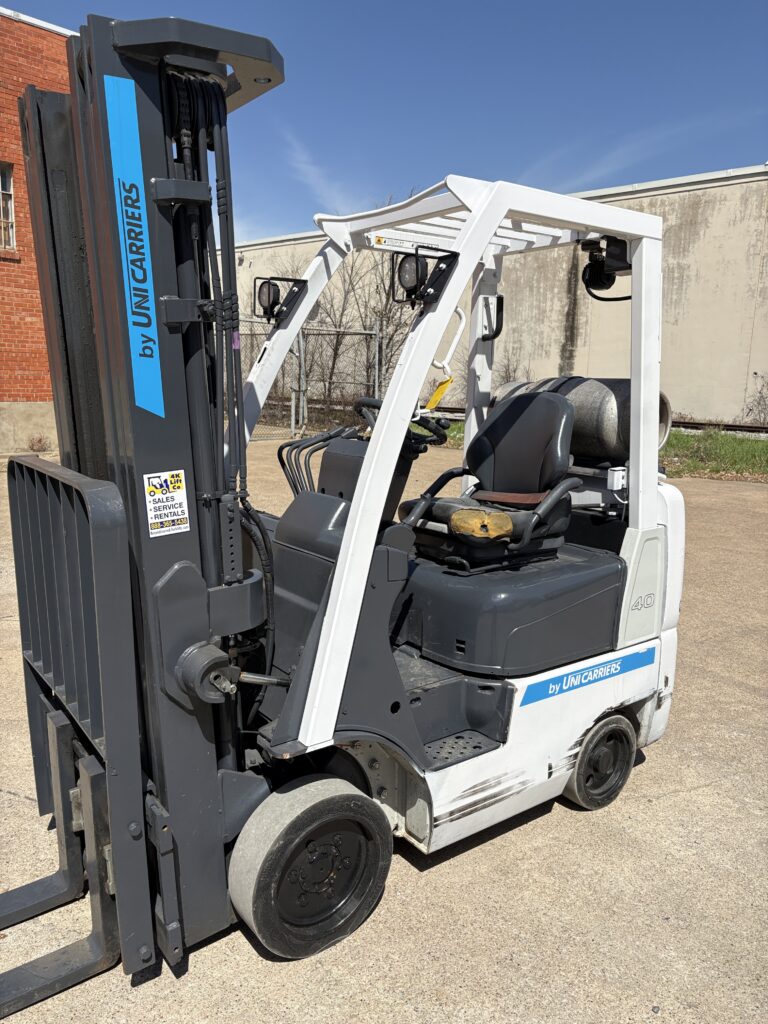
When it comes to minimizing the carbon footprint of your logistics operation, sometimes the answers start right under your feet. Literally. The fuel sources feeding the fleet that drives across your warehouse floor can drastically change how your facility impacts the environment — from local air quality to global greenhouse emissions.
Operating efficiency is always going to be job one when it comes to material handling procedures. Moving pallets from where they are to where they need to go, as quickly as possible, is the name of the game. But if you’re like most facility managers out there, the after-effects of internal combustion engines have become your primary concern. From deteriorating air quality at the job site to contributing to irreversible climate change, cutting back on harmful outputs has become just as important as keeping up with shipping deadlines.
The question is, where do you start?
The Power Plant | Measuring Emissions from Forklift Engines
All internal combustion engines are going to expel byproducts as they generate power. In most cases, these are going to be carbon dioxide (CO2), nitrogen (NO), and particulate emissions. Depending on the make and model of your lift, one propane-powered machine can create multiple tons of carbon dioxide every year. Operating one forklift eight hours a day, five days a week, creates a respectable amount of pollution. Now consider how much ten or twenty of those machines are adding to your operation’s total output.
CO2, NO, and particulate matter hang over industrial parking lots and loading bays like a giant, ever-present cloud. They create heat islands around office parks and add to greenhouse gases that harm the environment on a global scale. But the dangers of forklift emissions don’t end when you step outside.
CO is a particularly nasty fume to have hovering over your warehouse floor. Each time you start up a diesel or LPG-powered lift truck, you’re expelling exhaust that could be trapped in your workspace. Couple that with poor ventilation, and you’ve got one unhealthy atmosphere for your workers. Nobody wants to spend eight to ten hours a day breathing toxic byproducts—I’m sure your staff feels the same way.
Going Green | Alternative Fuel Sources for Forklifts
Eliminating your dependence on ICEs is the single greatest step you can take to reduce the impact of forklift emissions on the environment. For many facilities, that begins and ends with electric power. The biggest selling point of electric forklifts is that they don’t pollute your air supply. By converting to all-electric power, you instantly remove the tailpipe emissions from your daily operation.
Even if your electricity comes from a coal-heavy power grid, electric forklifts use less energy per hour than a gas or diesel engine. What’s more, they last longer and require less maintenance than their ICE counterparts. If you’re able to convert your entire fleet to electric power, you’ve effectively eliminated your day-to-day carbon footprint.
For heavy-duty lifts that used to be cornered by electric technologies, hydrogen fuel cells are gaining a lot of steam. These forklifts run on hydrogen gas and emit water vapor and heat as byproducts. By going old school with combustible fuels, it’s possible to operate a green forklift that doesn’t negatively impact the environment.
Fewer Fumes | Maintaining Indoor Air Quality
Operating gas or diesel-powered lifts indoors can significantly impact air quality at your facility. Forklift emissions from IC engines have been directly linked to symptoms of asthma and other respiratory disorders. CO can build up extremely fast in a warehouse, especially if your ventilation system is designed to accommodate IC engines.
Remember that propane, diesel, and gasoline don’t actually burn cleanly. They require supplemental oxygen in order to combust effectively, which creates carbon monoxide as a byproduct. In heavy concentrations, CO can cause your operators and warehouse workers to experience fatigue, headaches, or death, depending on how much is pumped into the air.
That’s why we recommend evaluating how much fresh air your facility can bring in compared to the amount of exhaust your IC engines are putting out. Many warehouse and distribution centers are going all-electric these days simply to avoid the cost of installing gigantic ventilation systems. If you don’t need engines running in your facility, eliminate the source of pollution and ventilate naturally.
Climate Control | Forklift Exhaust in Hot/Humid Places
Depending on where your facility is located, you may be subject to additional environmental factors. In northern Texas, ground-level ozone can become a severe problem when the summer heats up. NO emissions and volatile organic compounds (VOCs) from diesel exhaust can react with sunlight to create Ozone, which the EPA refers to as “smog”.
This can lead to Ozone Action Days where businesses are encouraged to curb heavy-duty truck traffic and limit forklift use. If you’re spending all day contributing to the problem, you can bet your local air quality is going to suffer.
Additionally, fueling up by the coastline creates potential risks should a bag of diesel or propane leak into the water. Spilled fuel is extremely harmful to sea life, so making the jump to sealed electric power can save you a lot of heartache if you’re located near a waterway.
30-Second Quiz | How Green is Your Material Handling Knowledge?
Did you know? Forklifts emit the majority of their toxins while idling.
1. Byproduct produced by hydrogen fuel cells?
Answer: Water vapor (and a small amount of heat).
2. Are electric forklifts better for the environment than gas or diesel?
False. While they don’t produce tailpipe emissions, battery production and disposal have an impact on the environment.
3. Why do we care about indoor air quality?
Answer: CO is colorless and odorless.
Upgrade Your Fleet and Increase Operational Efficiency
While switching to electric power is great for cutting your carbon emissions down to nearly zero, sometimes an ICE-filled fleet is necessary to get the job done. Maybe you work outdoors or need a pallet jack that can navigate bumpy terrain. If your forklifts see any amount of rain or mud, you’re better off with tires that can handle wet and slippery surfaces.
Switching fuel sources can drastically improve the air quality at your facility, but there are other ways to increase efficiency. Idling is the largest producer of greenhouse gases from forklift engines. If you’re interested in cutting back on your pollution output without upgrading your fleet, try implementing a policy that forces idle engines to shut down after 3 minutes of sitting.
Similar improvements can be had by optimizing the flow of traffic throughout your warehouse. Eliminating two-way traffic creates structured traffic patterns and prevents forklifts from double-backing to find open loading docks or storage cubes. Both of these solutions can reduce harmful emissions without replacing a single machine.
Operational Practices Reduce Your Carbon Footprint
Part of eliminating unnecessary emissions comes with operating your equipment responsibly. Fleet inefficiencies like dead time, long travel distances, and poor routing can lead to excessive idling. By utilizing telematics data, you can pinpoint wasted time and fuel throughout the plant.
Another factor to consider is the proper maintenance of your units. Forging- or gasoline-powered engines that are well maintained burn their fuel more completely, eliminating wasted particulates and reducing overall output. Keep your filters clean and your fuel system free of deposits to make sure your equipment is running clean and efficiently.
Thinking Ahead | Planning for an Electric Future
If you made it this far, you’re probably considering making the switch to electric power. Here at 4K Lifts, we love talking to customers about making the transition away from ICE trucks. But that doesn’t mean you have to throw out your gas/diesel trucks and start from scratch.
Converting to electric can be a headache, but with proper planning, your transition can be quick and painless. Start by taking inventory of how much power you’re using on a daily basis. How many chargers do you need to outfit your facility? Electric forklifts require dedicated power from your facility’s breaker box. Do you have enough power available during off-peak hours to accommodate your fleet’s charging schedule?
Don’t have the money to go out and buy a fleet of shiny new electric trucks? Don’t worry! The used and reconditioned market is a great way to dive right into electric power. Buying a quality reconditioned electric lift from 4K will put you closer to your zero emissions goal than purchasing a new gas forklift.
Interested in learning more about how you can convert to electric power? Give us a call or stop by one of our locations. One of our sales representatives would be happy to help you design a cost-effective roadmap for your facility’s unique needs.
4K Lifts | Expert Forklift Repair, Maintenance, and Sales
For over 35 years, 4K Lifts has been providing customers in the Dallas area with quality pre-owned forklifts. We specialize in giving our lifts impeccable cosmetic and mechanical upgrades that rival the quality of brand-new equipment.
Whether your fleet runs on electricity, diesel, propane, or gas, we have the vehicles and expertise to meet your needs. Our service technicians are certified by the manufacturers we represent to ensure that you’re getting the best quality parts and services for your money. If you’re looking to take the next step towards a cleaner, more efficient warehouse, give us a call or stop by and see us today.
Frequently Asked Questions
Q. How much CO2 does a standard propane forklift emit per hour?
On average, a mid-sized LPG forklift produces approximately 12 to 15 pounds of $CO_2$ for every hour of operation. This varies based on the engine’s age, maintenance level, and the weight of the loads being moved throughout the shift.
Q. Is an electric forklift really better for the environment if the local power grid uses coal?
Yes. Even when powered by a carbon-heavy grid, electric forklifts are more energy-efficient than internal combustion engines. Furthermore, they eliminate point-of-use emissions, which significantly improves indoor air quality and worker safety within the facility.
Q. How does the impact of forklift emissions on the environment change in humid climates?
High humidity can affect the combustion process in older engines, potentially increasing the production of smoke and particulates. Additionally, salt air can lead to faster degradation of exhaust systems, making regular maintenance essential for controlling emissions in coastal regions.